November Birth Flowers: Meanings, Symbolism, and Daily Birthday Flowers
November arrives when the flowering year has noticeably narrowed. In many temperate gardens, summer annuals have disappeared, deciduous trees are losing their leaves, and the first hard frosts may already have arrived. Yet one flower remains strongly identified with this part of the calendar: the chrysanthemum.
The official November birth flowers are chrysanthemum and peony. Chrysanthemums bring extraordinary variety in shape and color, with meanings that can include joy, longevity, friendship, honesty, remembrance, and respect. Peonies contribute a very different tradition, carrying ideas of prosperity, honor, romance, good fortune, and a happy marriage.
AT A GLANCE
Joy, abundance, loyalty.
The chrysanthemum for happiness and lasting friendship.
The peony for love and prosperity.

Chrysanthemum: November’s Primary Birth Flower
Chrysanthemums, commonly shortened to mums, range from simple daisy-like flowers to dense pompons, curved spider forms, and large many-petaled blooms. Yellow may be the color most closely suggested by the name chrysanthemum derives from words meaning “gold flower”, but cultivated varieties appear in white, pink, red, purple, bronze, green, and many blended shades.
Their late-season flowering makes them a natural match for November. Meanings vary widely by place and color, but joy, friendship, longevity, loyalty, and remembrance are among the most familiar. Explore the complete chrysanthemum birth flower guide.
One Chrysanthemum Can Mean Very Different Things Around the World
Few birth flowers demonstrate the limits of a single “flower meaning” as clearly as the chrysanthemum.
In one context, a chrysanthemum may communicate happiness. In another, the same flower may be closely connected with mourning.
That does not mean one interpretation is correct and another is wrong. Flower symbolism develops through local customs, ceremonies, literature, religion, and repeated social use.
Peony: November’s Secondary Birth Flower
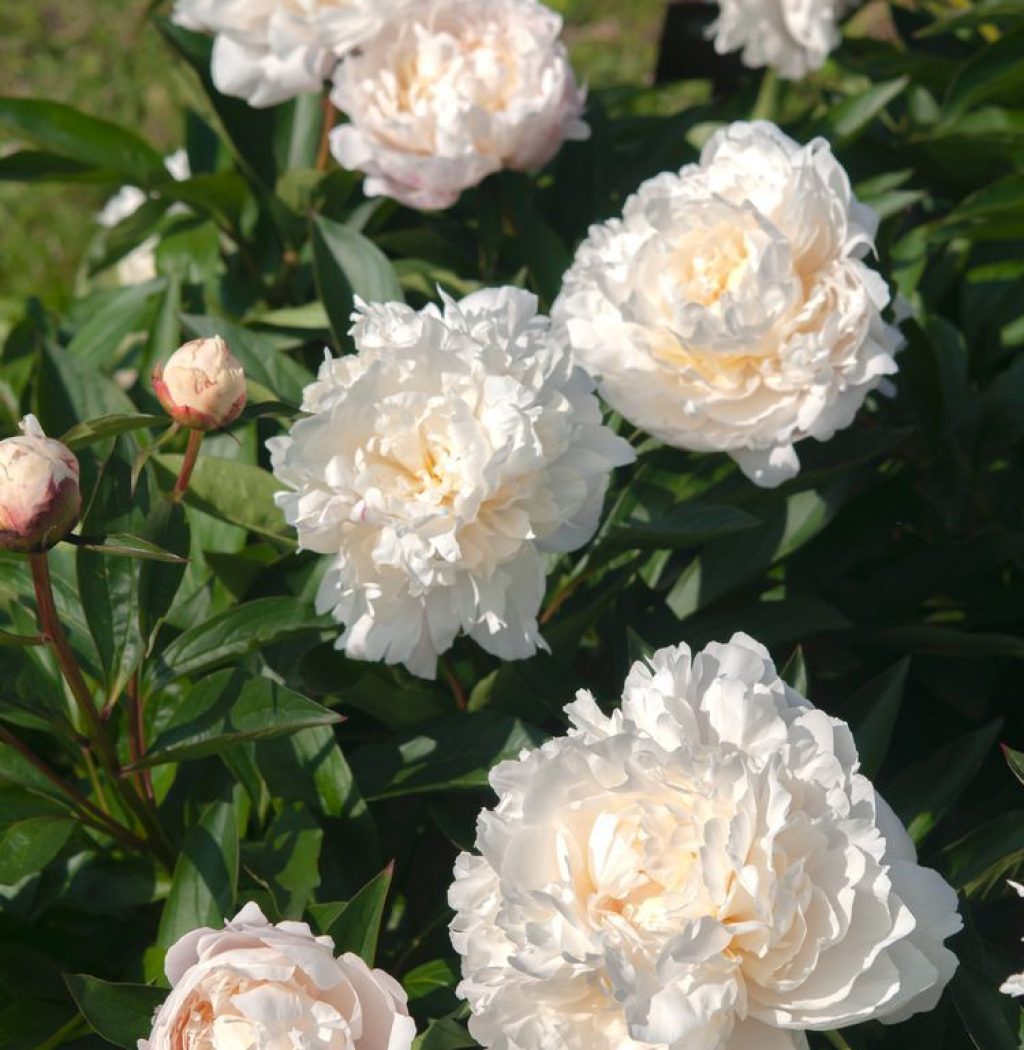
Peonies are famous for generous, often fragrant flowers packed with petals. Depending on the type, they grow as herbaceous perennials that die back each year or as woody tree peonies.
Their traditional language centers on prosperity, good fortune, honor, romance, and happy relationships. Unlike chrysanthemums, however, peonies are not typical November bloomers in temperate climates. Most flower much earlier in the growing year.
That seasonal contrast makes November’s pairing unusual: one flower belongs visibly to late autumn, while the other belongs to the symbolic calendar rather than the November garden. Read more about the peony as a November birth flower.
In East Asian traditions
Chrysanthemums have a long cultural history in East Asia. In China, the flower has been admired for centuries and is counted among the traditional “Four Gentlemen” of Chinese art, alongside plum blossom, orchid, and bamboo.
In Japan, the chrysanthemum has a particularly prominent imperial association. The flower appears in royal symbolism and has become closely connected with longevity, dignity, and nobility.
In parts of Europe
The meaning can shift considerably. In several European countries, chrysanthemums, especially certain white forms, are strongly connected with funerals, cemeteries, and remembrance. A bouquet that feels cheerful in one country may therefore carry a solemn message in another.
Color changes the interpretation again
Even within the same culture, color can alter the message.
- Red may suggest love or strong affection.
- Pink can communicate gentleness and optimism.
- Yellow is frequently connected with happiness and celebration in modern interpretations.
- White may indicate honesty, respect, sympathy, or mourning depending on the setting.
- Purple is sometimes linked with longevity and well-being.
The chrysanthemum is therefore a useful reminder that Flower Symbolism is not a universal code. Meaning depends on who is giving the flower, where they are, and which tradition they are drawing from.
Birth Flowers for Every Day in November
An older floral tradition assigns a specific bloom to every calendar day. Find your birthday below and the meaning it carries.
november 1
November 1st Birth Flower: Chrysanthemum
Chrysanthemums can be neat and daisy-like, tightly rounded, or dramatically spidery depending on the variety. For November 1st, the flower brings a layered message of joy, loyalty, longevity, and remembrance.
november 2
November 2nd Birth Flower: Peony
Peonies unfold from rounded buds into substantial, many-petaled flowers. Their traditional connections with prosperity, honor, good fortune, and happy relationships give November 2nd an especially generous symbolic language.
november 3
November 3rd Birth Flower: Bryonia
Bryonia is a climbing plant that uses tendrils to move through surrounding vegetation. Its small flowers are followed by berries, giving the plant a character shaped more by vigorous growth than conventional floral display.
november 4
November 4th Birth Flower: Maidenhair Fern
Maidenhair fern carries delicate fan-shaped leaflets on fine, dark stems. Although it does not produce flowers, its graceful foliage has long suggested discretion, sincerity, and quiet elegance.
november 5
November 5th Birth Flower: Pine
Pines remain green through seasons that strip many other trees of their leaves. Their persistence makes endurance, longevity, and constancy natural themes for a November 5th birthday.
november 6
November 6th Birth Flower: Yew
Yew is an evergreen tree with dark foliage and an exceptionally long cultural history. Its longevity has connected it with endurance and immortality, while its toxicity and cemetery associations give it a more solemn character.
november 7
November 7th Birth Flower: Marigold
Marigolds concentrate autumn color into dense heads of yellow, orange, and red. Their meanings can move between warmth, creative energy, devotion, and remembrance.
november 8
November 8th Birth Flower: Chinese Aster
Chinese asters produce full flower heads in shades ranging from white and pink to violet and deep purple. Their refined appearance lends this date themes of thoughtful remembrance and graceful variety.
november 9
November 9th Birth Flower: Myrrh
Myrrh is best known as an aromatic resin rather than a showy flower. Its long use in incense, perfume, and ceremonial traditions gives November 9th a distinctive language of value, solemnity, and preservation.
november 10
November 10th Birth Flower: Hibiscus
Hibiscus flowers are large, open, and immediately noticeable, yet individual blooms may be short-lived. That contrast has made delicate beauty and the importance of the present moment fitting interpretations.
november 11
November 11th Birth Flower: White Camellia
White camellias combine glossy evergreen foliage with carefully arranged petals. Their clean, symmetrical appearance conveys admiration, refinement, and affection expressed with restraint.
november 12
November 12th Birth Flower: Lemon
Lemon trees produce fragrant white flowers, often tinged with purple, before their familiar yellow fruit develops. The progression from blossom to fruit makes freshness, usefulness, and productive energy suitable themes.
november 13
November 13th Birth Flower: Tea Plant
The tea plant, Camellia sinensis, is an evergreen shrub with small white flowers and glossy leaves. Its place in daily life gives November 13th an understated message of hospitality, ritual, and connection created through simple routines.
november 14
November 14th Birth Flower: Pineapple
Pineapple develops from many individual flowers that fuse into a single fruit. That unusual structure makes cooperation and abundance particularly fitting ideas for this birthday plant.
november 15
November 15th Birth Flower: Crown Vetch
Crown vetch produces rounded clusters of pink-and-white pea-like flowers on spreading stems. Its persistent growth gives the plant a strong sense of tenacity and the ability to cover difficult ground.
november 16
November 16th Birth Flower: Christmas Rose
Despite its common name, the Christmas rose is a hellebore rather than a true rose. Its pale flowers can appear during the coldest part of the year, making hope and quiet resilience natural themes.
november 17
November 17th Birth Flower: Butterbur
Butterbur sends up unusual flower clusters before its enormous leaves fully develop. That reversed sequence—flowers first, foliage later—gives the plant a distinctive sense of beginnings that do not follow the expected order.
november 18
November 18th Birth Flower: Mexican Aster
Mexican aster is another common name for cosmos, a flower with open heads and finely divided foliage. Its association with harmony and order brings balance to the November 18th birthday.
november 19
November 19th Birth Flower: Sweet Alyssum
Sweet alyssum forms low carpets covered with tiny white, pink, or purple flowers. Its honey-like fragrance and mass of miniature blooms create an impression of sweetness built from small details.
november 20
November 20th Birth Flower: Bugloss
Bugloss plants commonly produce blue flowers above rough or bristly foliage. The contrast between coarse leaves and vivid blooms gives this date a character of honesty, resilience, and unexpected beauty.
november 21
November 21st Birth Flower: Campanula
Campanulas are commonly called bellflowers because of their distinctive flower shape. Their blue, purple, white, or pink bells have long been connected with gratitude and enduring affection.
november 22
November 22nd Birth Flower: Berberis
Berberis shrubs combine small flowers with thorny branches and, in many species, bright berries. Their mixture of attraction and defense makes protection and firm personal boundaries suitable themes.
november 23
November 23rd Birth Flower: Fern
Ferns reproduce through spores rather than flowers, yet their unfolding fronds have made them enduring symbols of sincerity, fascination, and hidden growth.
november 24
November 24th Birth Flower: Viburnum
Viburnums are an exceptionally varied group of shrubs, producing flower clusters followed in many species by colorful fruit. Their multi-season presence gives November 24th a sense of reliability and lasting contribution.
november 25
November 25th Birth Flower: Sumac
Sumac may produce upright clusters of red fruit and spectacular autumn foliage. Its strongest visual moment often arrives after conventional flowering has finished, making transformation a central theme.
november 26
November 26th Birth Flower: Yarrow
Yarrow gathers numerous tiny flowers into broad, flat clusters. Its long history as a traditional herb has contributed meanings of healing, courage, and protection.
november 27
November 27th Birth Flower: White Gum
White gum belongs to the broad eucalyptus group, whose flowers are often dominated visually by numerous stamens rather than conventional petals. Aromatic foliage gives the plant an identity extending well beyond its bloom.
november 28
November 28th Birth Flower: Cotton
Cotton produces hibiscus-like flowers before developing the soft white fibers for which the plant is famous. The dramatic transformation gives November 28th a fitting message of usefulness emerging from an easily overlooked beginning.
november 29
November 29th Birth Flower: Cactus
Cacti protect stored water behind thick stems and, frequently, formidable spines. Their often spectacular flowers create a memorable contrast, making endurance and guarded tenderness suitable interpretations.
november 30
November 30th Birth Flower: Fallen Leaves
Fallen leaves are not flowers, yet they make an unusually appropriate ending to November. Their place in the calendar shifts attention from blooming to release, completing a month shaped by seasonal change.
All 24 Blooms
Explore More Birth Flowers
FAQ
Frequently asked
“Mum” is simply a common shortened form of chrysanthemum, especially in North American English. The nickname is widely used for the potted and garden chrysanthemums sold during autumn.
No. Their interpretation changes considerably between cultures. They may express joy, longevity, friendship, or good fortune in one setting and mourning or remembrance in another. Context matters more for chrysanthemums than for many other birth flowers.
Birth-flower traditions are symbolic calendars rather than exact records of what is flowering locally. Peony’s November association can therefore exist even though the plant generally blooms earlier in temperate climates.
The name is derived from Greek roots commonly translated as “gold flower.” Early forms were strongly associated with yellow or golden blooms, although modern chrysanthemums now come in an extensive range of colors.
No. Christmas rose is a common name for Helleborus niger, a member of the buttercup family. The “rose” part of its name refers to the appearance of the flower rather than its botanical family.