Larkspur: July's Elegant Birth Flower
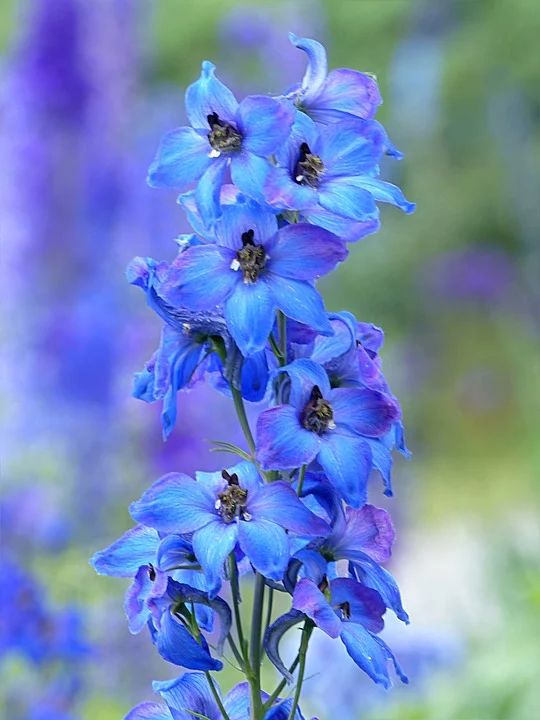
Few summer flowers reshape a garden quite like larkspur. Its elegant flowering stems rise above surrounding plants, adding height, movement, and ribbons of blue, purple, pink, and white that sway gently through midsummer.
As one of July’s birth flowers, larkspur has long symbolized encouragement, openness, and joyful ambition, qualities that suit life’s new beginnings and celebrations.
AT A GLANCE
Love, admiration, devotion.
A cherished flower for celebrating life's special moments.
Why Larkspur Changes the Shape of a Bouquet
Most flowers add color at roughly the same height. Larkspur changes the entire silhouette.
Its long stems guide the eye upward, which gives arrangements a sense of scale without requiring a large number of flowers. Florists often use it to break up rounded blooms, create gentle asymmetry, or add space between denser flowers.
A few stems can make a hand-tied bouquet feel looser and more natural. A larger group can create a dramatic display with a distinctly garden-grown character.
Larkspur works especially well with:
- roses and peonies for a romantic summer arrangement
- daisies and grasses for a meadow-inspired bouquet
- white flowers and greenery for a cleaner, more restrained palette
- dried seed heads and preserved foliage for a lasting display
The stems often curve slightly rather than standing in identical lines. Keeping some of that natural variation gives the arrangement more movement.
Guide to the Larkspur
Why Cottage Gardens Rarely Feel Complete Without Larkspur
Larkspur has remained a cottage-garden favourite for generations because it:
- Adds graceful vertical interest without creating heavy blocks of colour.
- Weaves naturally between neighbouring plants, filling gaps without overwhelming them.
- Pairs beautifully with classic cottage flowers such as roses, foxgloves, hollyhocks, daisies, cosmos, and peonies.
- Introduces cool shades of blue, purple, pink, and white that balance the warmer colours of midsummer.
- Brings movement to borders, with slender flower spikes that sway gently in the breeze.
- Attracts bees and other pollinators, helping create a lively, wildlife-friendly garden.
- Works equally well in informal borders and cutting gardens, providing long stems for fresh bouquets.
- Often self-seeds in suitable conditions, allowing new plants to appear naturally each year and giving established gardens the relaxed, evolving character that defines the traditional cottage-garden style.
A Color Guide for Larkspur Gifts
Color can shape the tone of a larkspur bouquet, although the recipient’s preferences should guide the final choice.
Larkspur Color | Common Association | Suitable Gift Direction |
Blue | Trust, encouragement, dignity | Graduations, friendship, professional milestones |
Purple | Admiration, accomplishment, creativity | Promotions, artistic achievements, birthdays |
Pink | Affection, warmth, joyful connection | Family celebrations and close friendships |
White | Sincerity, remembrance, a new chapter | Weddings, transitions, reflective occasions |
Mixed colors | Celebration, optimism, shared happiness | July birthdays and summer gatherings |
Blue larkspur remains the most recognizable choice. Its cool color can balance warmer flowers and create an arrangement that feels fresh during midsummer.
Pink and lavender varieties produce a softer effect, while deep purple adds visual weight. White larkspur creates height without competing with a carefully controlled color scheme.
Why Larkspur Is the Perfect July Birth Flower
July gardens often contain many flowers competing for attention. Larkspur succeeds through form as much as color.
Its tall stems create structure, its flowers bring cool shades into the hottest part of the season, and its airy growth keeps large plantings from appearing heavy. As a birth flower, it suits people whose presence encourages others and brings momentum to shared plans.
All 24 Blooms
Explore More Birth Flowers
FAQ
Frequently Asked Questions About the Larkspur Birth Flower
Larkspur is commonly associated with openness, encouragement, affection, dignity, and a positive outlook. Color can add another layer to the intended message.
Larkspur commonly reaches its main flowering period during early and midsummer, which aligns with July in many temperate climates.
The plants are closely related and their names are sometimes used interchangeably. Annual larkspur generally has lighter growth and a one-season life cycle, while many familiar garden delphiniums are larger perennials.
Most cultivated larkspur is grown as an annual. It may produce new seedlings in later years when mature seeds fall in suitable conditions.
Yes. Its long stems bring height and movement to fresh bouquets. The flowers can also be dried for decorative arrangements.