Narcissus: December's Flower of Renewal
The Narcissus is one of December’s official birth flowers, bringing a welcome burst of color just as winter begins to loosen its grip. Known for its elegant trumpet-shaped blooms and cheerful appearance, narcissus has become a timeless symbol of hope, renewal, and fresh beginnings.
While many plants are only starting to awaken, these early flowers brighten gardens with shades of white, yellow, orange, and cream.
AT A GLANCE
Love, admiration, devotion.
A cherished flower for celebrating life's special moments.

How to Identify a Narcissus
The Narcissus genus includes dozens of species and thousands of cultivated varieties, but most share several distinctive features:
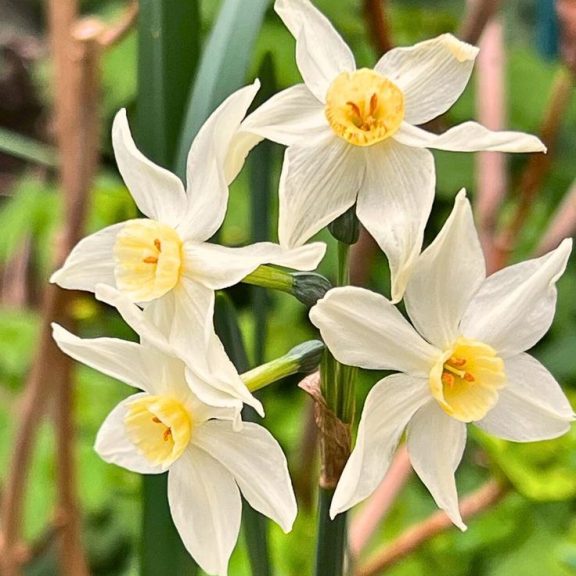
- Trumpet-shaped or cup-shaped flowers surrounded by six petal-like tepals.
- One or more blooms growing from a single leafless stem.
- Long, narrow, blue-green leaves emerging directly from the base.
- White, yellow, cream, orange, or bi-colored flowers.
- Early flowering, often appearing from late winter to early spring before many other garden plants begin growing.
Guide to the Narcissus
Why Narcissus Is Often Called a Daffodil
Many people use the names narcissus and daffodil interchangeably, but there is a small botanical difference.
Narcissus is the scientific name for the entire genus, which includes dozens of wild species and thousands of cultivated varieties. Daffodil is the common name most often used for the larger, trumpet-flowered members of that group.
In other words, every daffodil is a narcissus, but not every narcissus is technically considered a daffodil. Other members of the genus include jonquils, paperwhites, and several miniature flowering types.
The Popular Types of Narcissus
The Narcissus genus includes thousands of cultivars, ranging from miniature rock-garden varieties to large, fragrant garden favorites.
Type | Best Known For | Common Uses |
Trumpet Daffodil | Large central trumpet | Borders and naturalized gardens |
Large-Cupped | Prominent cup with broad petals | Spring displays and cut flowers |
Double Narcissus | Layered petals with extra floral parts | Ornamental gardens and bouquets |
Jonquilla | Small fragrant flowers on each stem | Containers and scented gardens |
Tazetta | Several blooms per stem | Indoor forcing and floral arrangements |
Miniature Narcissus | Compact growth | Rock gardens and edging |
Despite their differences, all belong to the Narcissus genus and share the graceful form that has made them spring favorites for centuries.
Narcissus Colors and Their Meanings
Although narcissus is widely associated with hope and renewal, different flower colors carry their own traditional meanings.
Color | Traditional Meaning | Best For |
Yellow | Joy, optimism, happiness | Celebrations, birthdays |
White | Purity, sincerity, fresh beginnings | New homes, weddings |
Cream | Warmth, kindness, appreciation | Thank-you gifts |
Orange-Centered | Energy, confidence, creativity | Congratulations |
Bi-Colored | Balance, harmony, individuality | Personal milestones |
Because many varieties combine two or more colors, narcissus bouquets are easy to personalize for different occasions.

When Narcissus Makes a Meaningful Gift
Narcissus symbolizes hope and new beginnings, making it suitable for many occasions throughout the year.
It is especially popular for:
- December birthdays, as one of the month’s official birth flowers.
- New homes, celebrating fresh starts and new opportunities.
- Graduations, marking the beginning of a new chapter.
- Get-well gifts, offering encouragement and optimism.
- Spring celebrations, where their cheerful blooms reflect the changing season.
Whether given as a bouquet, potted bulbs, or planted in the garden, narcissus brings a message of positivity and renewal.
Why Narcissus Returns Year After Year
One reason narcissus remains one of the world’s most popular spring flowers is its remarkable reliability.
Once planted in a suitable location, the bulbs require very little attention. Over time, underground bulbs naturally divide to produce new plants, allowing a small planting to grow into an impressive spring display without replanting each year.
Many historic gardens still feature narcissus that have been blooming in the same location for decades, proving that these hardy bulbs can provide beauty for generations with minimal care.
All 24 Blooms
Explore More Birth Flowers
FAQ
Frequently Asked Questions – Narcissus
Narcissus is recognized as one of December's official birth flowers because it symbolizes hope, renewal, and new beginnings. Although many varieties bloom in late winter or early spring, their uplifting symbolism has long connected them with the birth flower tradition.
Not exactly. Narcissus is the botanical name for the entire group of plants, while daffodil is the common name used for many of the larger trumpet-flowered varieties. Every daffodil belongs to the Narcissus genus, but not all narcissus flowers are considered daffodils.
Most narcissus are hardy perennial bulbs. After flowering, they store energy underground and return each spring, often producing more blooms as the bulbs multiply over time.
Yes. Narcissus grows well in containers provided the bulbs are planted in well-drained soil and receive enough winter chilling. Potted varieties are especially popular for patios, balconies, and spring displays.
Yes. All parts of the plant, particularly the bulbs, contain compounds that are toxic if eaten by people or pets. They should be planted where children and animals are unlikely to dig them up or consume them.