
Gladiolus: August's Bold Birth Flower
Growing tall above neighboring flowers, the Gladiolus birth flower has a commanding presence that’s hard to overlook. Its upright stems, lined with colorful blossoms from bottom to top, create instant drama in gardens and floral arrangements alike. As one of August’s official birth flowers, gladiolus captures the confidence and warmth of late summer with blooms that are both elegant and striking.
AT A GLANCE
Love, admiration, devotion.
A cherished flower for celebrating life's special moments.

Why Gladiolus Is Called the Sword Lily
Few flowers have a name that describes them quite so accurately.
The name Gladiolus comes from the Latin word gladius, meaning “sword,” a reference to the plant’s long, narrow leaves that rise upright like polished blades. This distinctive shape earned it the familiar nickname Sword Lily, even though it belongs to the iris family rather than the true lily family.
Wild gladiolus species originated in southern Africa and parts of the Mediterranean. Over centuries, horticulturists developed hundreds of hybrids, transforming a simple wildflower into one of the world’s most popular ornamental plants.
Quick Fact: Unlike tulips or daffodils, gladiolus grows from a corm rather than a true bulb. Each healthy corm produces a flower spike while developing new corms for future seasons.
Guide to the Gladiolus
Why Gladiolus Adds Height to Every Garden
One of gladiolus’ greatest strengths is its ability to introduce vertical structure into a planting. While many summer flowers spread outward, gladiolus grows upward, creating tall flower spikes that naturally draw the eye through the garden.
Garden designers often plant gladiolus in groups because it:
- Creates bold vertical accents among lower-growing flowers
- Extends the flowering season by staggering planting times
- Adds depth without overcrowding surrounding plants
- Introduces vibrant midsummer colour after many spring flowers have faded
- Provides long stems that are ideal for cutting gardens and floral arrangements
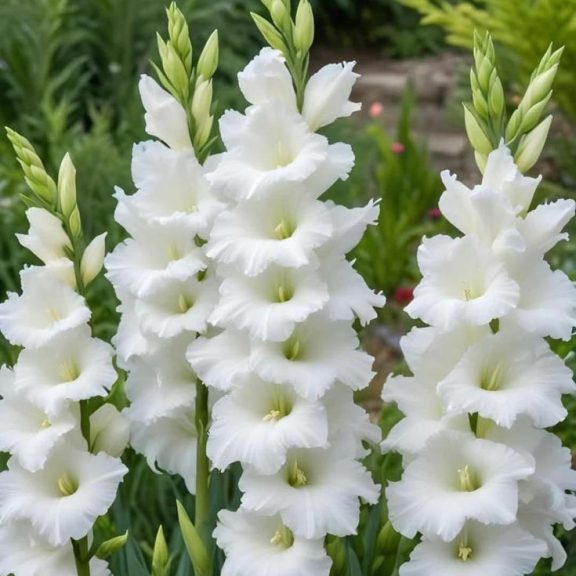
How Gladiolus Flowers Open Along the Stem
Unlike many flowers that open all at once, gladiolus blooms gradually from the bottom of the flower spike to the top. The lowest flowers usually open first, while buds higher up continue developing over the following days.
This staggered blooming pattern allows a single stem to remain attractive for much longer than flowers that bloom all at once. As older flowers begin to fade, new blossoms continue opening above them, creating the impression of a constantly changing display.
The same feature makes gladiolus especially valuable as a cut flower. Florists often harvest stems before every bud has opened, allowing the remaining flowers to bloom naturally in the vase over the course of several days.
Gladiolus Colors and Their Meanings
Although the flower itself has long represented strength and sincerity, individual colors carry their own traditional meanings.
Color | Traditional Meaning | Ideal Occasion |
Red | Courage, passion, determination | Celebrating achievements or anniversaries |
Pink | Admiration, kindness, gratitude | Birthdays, thank-you gifts |
White | Integrity, honesty, remembrance | Weddings and sympathy arrangements |
Purple | Respect, dignity, success | Promotions and graduations |
Yellow | Optimism, encouragement | New ventures and celebrations |
Orange | Confidence, enthusiasm | Career milestones and congratulations |
Because florists can mix several colors in one arrangement, gladiolus bouquets are easy to personalize without losing their dramatic appearance.
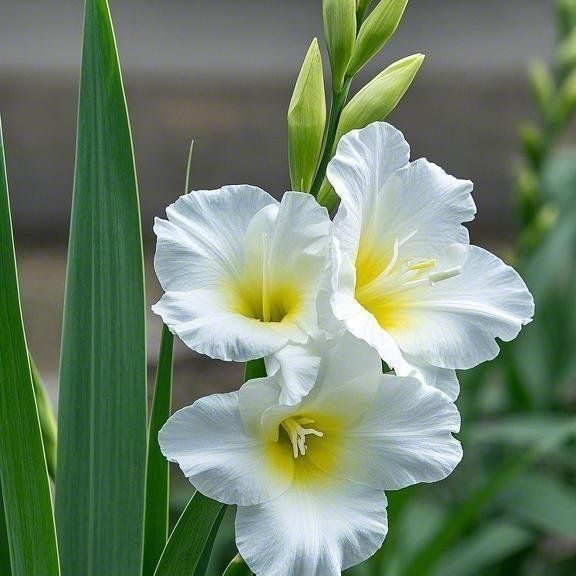
Why Gladiolus Is a Florist's Favourite
Gladiolus has been a staple of floral design for decades because a single stem delivers height, color, and longevity all at once. Its upright flower spikes naturally add structure to bouquets, allowing florists to create arrangements that feel larger and more balanced without using excessive flowers.
It’s especially valued because it:
- Provides long, straight stems that are easy to arrange
- Opens gradually, extending the life of fresh bouquets
- Comes in almost every major flower color, making it easy to match different themes
- Pairs well with roses, lilies, sunflowers, hydrangeas, and seasonal greenery
- Works equally well in modern, formal, and cottage-style arrangements
Gladiolus Through the Blooming Season
Unlike flowers that bloom all at once and quickly fade, gladiolus changes throughout the season as each flower spike develops.
- Early Summer: Green foliage emerges first, followed by tall stems that rapidly gain height before the first buds begin to open.
- Peak Bloom: Flowers open gradually from the bottom upward, creating colourful spikes that continue changing over several days. This is the ideal stage for both garden displays and cut flowers.
- Late Season: As flowering finishes, the remaining blooms fade while seed pods begin to develop. Gardeners often remove spent flower spikes to keep plants tidy and help direct energy back into the corm.
- After Flowering: The foliage continues feeding the corm before naturally dying back. In colder climates, gardeners typically lift and store the corms over winter for planting again the following spring.
All 24 Blooms
Explore More Birth Flowers
FAQ
Frequently Asked Questions About the Gladiolus Birth Flower
Gladiolus reaches its peak flowering season during midsummer and late summer, making it a natural choice as one of August's official flowers. Its tall flower spikes and long-standing symbolism of strength, sincerity, and perseverance have connected it with the month for generations.
No. Although it's commonly called the Sword Lily because of its long, blade-like leaves, gladiolus issaSW not a true lily. It belongs to the iris family (Iridaceae), while true lilies belong to the genus Lilium.
They can. In warm climates, gladiolus corms are often hardy enough to remain in the ground and flower again the following season. In colder regions, gardeners usually lift the corms after the foliage dies back, store them through winter, and replant them in spring.
Most gladiolus varieties are grown for their impressive flower spikes rather than their fragrance. However, a small number of cultivars produce a light, sweet scent, although this is not a common characteristic across the species.
Yes. Compact varieties perform well in large containers with good drainage, regular watering, and plenty of sunlight. Taller cultivars may also grow successfully in pots, although they often benefit from staking to support the flower spikes as they develop.