Poppy: August's Iconic Birth Flower
The Poppy birth flower is one of August’s birth flowers, celebrated for its delicate, paper-thin petals and brilliant bursts of color. While each bloom lasts only a short time, poppies leave a lasting impression, transforming roadsides, meadows, and gardens into vibrant displays that signal the height of summer.
Unlike many cultivated flowers that depend on formal garden borders, poppies often flourish in open meadows, roadsides, and wild landscapes. Their carefree nature, vivid colours, and distinctive seed pods have inspired artists, writers, and gardeners for centuries, making the poppy one of the world’s most recognizable summer flowers.
AT A GLANCE
Love, admiration, devotion.
A cherished flower for celebrating life's special moments.
Why Poppy Fields Are So Spectacular
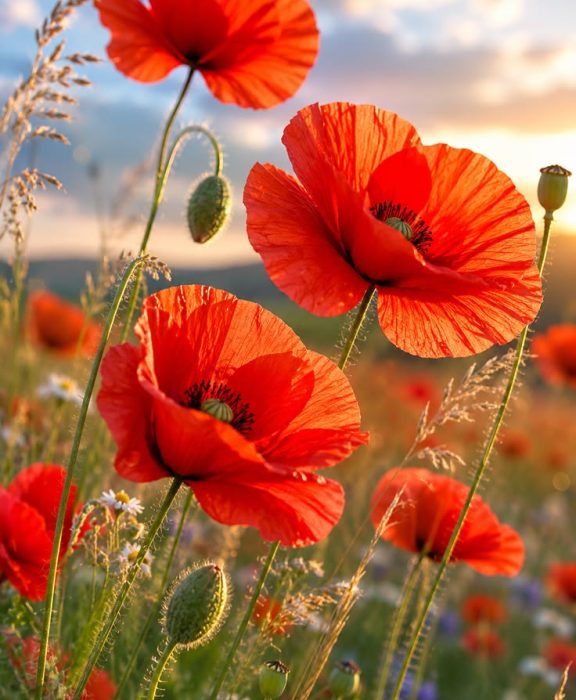
Unlike many garden flowers that bloom in carefully spaced groups, poppies often flower in large drifts that seem to appear almost overnight. Thousands of blooms moving together in the wind create one of the most recognizable sights of late spring and summer.
Poppies naturally colonize open ground, meadows, roadsides, and recently disturbed soil. Because individual plants flower at slightly different times, large patches remain colorful for weeks, even though each bloom lasts only a short period.
Their simple flower shape also allows sunlight to pass through the delicate petals, giving poppy fields their glowing appearance during the morning and evening.
Guide to the Daffodil
Why Poppies Have Inspired Artists and Cultures for Centuries
Few flowers have appeared in paintings, poems, and folklore as often as the poppy. Their vivid colors and seemingly effortless beauty have made them a favorite creative subject across different cultures and time periods.
Artists have long been drawn to fields of blooming poppies because they create dramatic landscapes that change with the seasons. Claude Monet famously painted expansive poppy fields, while countless botanical illustrators have captured the flower’s delicate petals and graceful movement.
Beyond the world of art, poppies have become woven into cultural traditions across the globe. In some regions, they represent the arrival of warmer weather and abundant wildflower displays. In others, particular species have become enduring symbols of remembrance and reflection.
Poppy Colors and Their Meanings
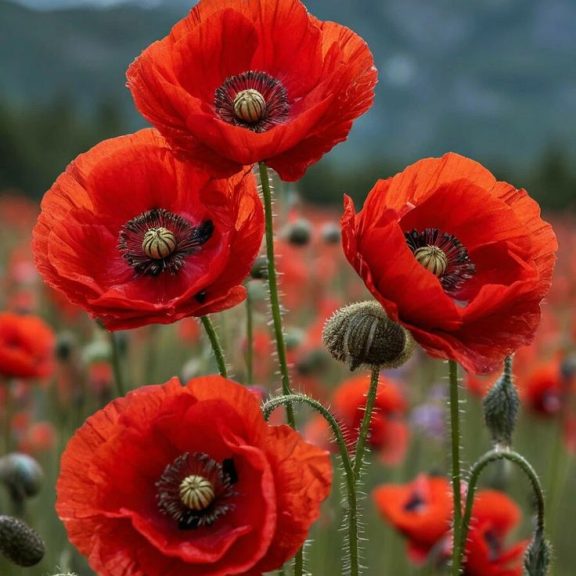
Poppy Color | Traditional Meaning | Popular Occasions |
Red | Remembrance, courage, deep respect | Memorials, commemorations |
Orange | Energy, enthusiasm, creativity | Celebrations, achievements |
Pink | Compassion, affection | Birthdays, friendships |
White | Peace, reflection, sincerity | Sympathy, remembrance |
Yellow | Happiness, optimism | Congratulations, cheerful gifts |
Purple | Imagination, admiration | Creative milestones |
Long After the Petals Fall: The Appeal of Poppy Seed Pods
Even after the petals have fallen, poppies continue adding interest to the garden through their distinctive seed pods.
- Rounded seed pods remain upright on slender stems, adding structure to borders after flowering ends.
- The pods gradually mature from green to soft tan or brown, creating subtle late-season texture.
- Florists often use dried poppy pods in wreaths, bouquets, and preserved arrangements because of their sculptural appearance.
- Tiny openings beneath the pod release ripe seeds naturally, allowing many annual poppies to self-seed for the following year.
- Left in place, the pods provide ornamental interest well beyond the flowering season, making poppies attractive even after the blooms have disappeared.
Why Poppies Rarely Stay Exactly Where You Plant Them
One of the reasons gardeners love poppies is their ability to surprise them.
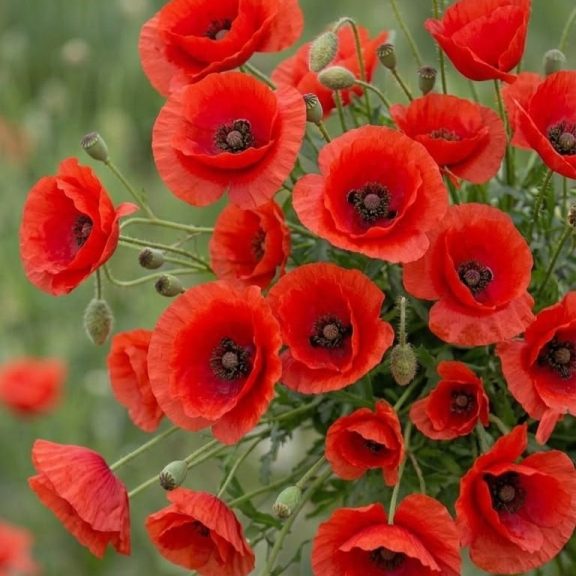
Many annual varieties scatter seed naturally after flowering, allowing new plants to emerge in different places the following season. Rather than growing in perfectly planned rows, poppies often appear where conditions suit them best, giving gardens a relaxed, meadow-like appearance.
Because seedlings establish themselves naturally, mature poppy displays often become larger and more colourful each year with very little effort from the gardener.
Growing Poppies at Home
Despite their delicate appearance, poppies are generally easy to grow when given the right conditions.
For the best results:
- Choose a location with full sun.
- Sow seeds directly into the soil, as many poppies dislike being transplanted.
- Plant in well-drained soil to prevent excess moisture around the roots.
- Water lightly while seedlings establish, then reduce watering as plants mature.
- Leave spent seed pods in place if you’d like poppies to self-seed naturally for the following year.
Many gardeners appreciate that established poppy patches often become more impressive over time with very little maintenance.
All 24 Blooms
Explore More Birth Flowers
FAQ
Frequently Asked Questions - Poppies
Poppies bloom throughout much of the summer and reach their peak during August in many regions, making them one of the month's official birth flowers. Their colorful display perfectly reflects the height of the growing season.
It depends on the species. Perennial poppies return each year from established roots, while annual varieties complete their life cycle in one season but often self-seed, producing new plants the following year.
No. Although red poppies are the most widely recognized, poppies naturally bloom in white, orange, pink, yellow, purple, salmon, and many bi-colored forms.
Yes. Compact varieties grow well in containers provided they receive plenty of sunlight and excellent drainage. Because many poppies develop deep taproots, larger pots generally produce healthier plants.
Not necessarily. The edible poppy seeds commonly used in baking come from specific cultivated varieties. Ornamental garden poppies should not be assumed to produce seeds that are suitable for culinary use unless they are grown specifically for that purpose.